FOR IMMEDIATE RELEASE
MEDIA CONTACT (s):
Luz Correa, Strategic Communications Officer/ 347.638.0816
Robin West, Senior Director, Senior Communications Director/ 347-604-0063
With Up to 80,000 Bronx Households Facing Loss of Food Benefits and 30,000 Residents at Risk of Losing Health Coverage, Urban Health Plan Convenes Bronx Leaders to Build a Coordinated Community Response
“A Bronx Call to Action: Protecting SNAP and Medicaid” Unites Elected Officials, Health Care Providers, Food System Leaders, Managed Care Organizations, Legal Advocates, and Community Partners in a Working Convening on June 12
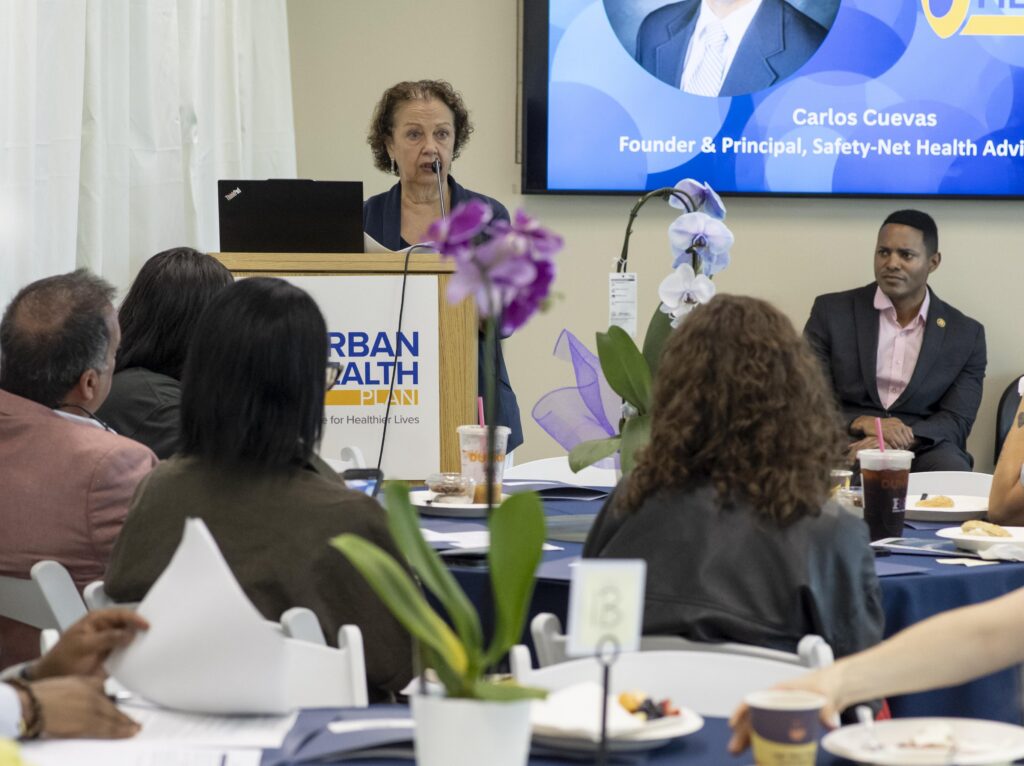
BRONX, N.Y., June 12, 2026 — Today, Urban Health Plan (UHP) convened “A Bronx Call to Action: Protecting SNAP and Medicaid” at El Nuevo San Juan Health Center. The working convening brought together elected officials, government leaders, health care providers, managed care organizations, food system leaders, legal advocates, and community-based organizations to develop a coordinated, community-driven response to federal benefit cuts that pose an immediate and measurable threat to hundreds of thousands of Bronx residents.
“For more than 52 years, Urban Health Plan has stood on the frontlines of health care in the Bronx, not just as a provider, but as a partner to the community we serve,” said Paloma Izquierdo-Hernandez, President and CEO of Urban Health Plan. “We have always understood that food security, housing stability, and access to coverage are central to everything we do. They are the foundation of a healthy community.”
At a moment when federal benefit programs face their most significant restructuring in decades, the impact on Bronx families is immediate and measurable. Between 60,000 and 80,000 Bronx households are projected to lose SNAP benefits. Between 20,000 and 30,000 residents could lose Medicaid or Essential Plan coverage. And between $158 million and $211 million could be pulled from the Bronx food economy. In a borough where 700,000 to 750,000 residents rely on Medicaid and nearly 490,000 people across approximately 195,580 households count on SNAP to afford groceries, these are not policy changes. They are a cascade of consequences.
For the Bronx family already managing food insecurity, a chronic illness, housing instability, or all three, losing SNAP or Medicaid means skipped medications, untreated conditions, and care deferred until it becomes a crisis. Emergency departments will absorb care that could have been preventive. Food pantries will be pushed beyond their capacity. Local bodegas, supermarkets, and small grocers will lose hundreds of millions in spending power. The cumulative effect will be a weaker, sicker, and more economically fragile borough.
The proposed changes to SNAP and Medicaid will have real, measurable consequences for patients and the borough, demanding a response that is organized, cross-sector, and built to last. “That is why we brought this room together,” Izquierdo-Hernandez continued, “because the strongest response to any crisis is a coordinated one, and the Bronx has always been at its best when we stand together.”
Urban Health Plan has served the Bronx and surrounding communities for over 52 years. With 13 clinical sites and more than 90,000 patients served annually, UHP understands what these cuts mean for households. Today’s convening is a working session where leaders across sectors came together to share the latest information, identify gaps in outreach and enrollment, and build a coordinated plan that Bronx residents can count on and that other communities across New York State can replicate.
The Convening Addressed:
- What HR1 cuts mean at the household level and how Bronx families will feel their impact in the months ahead
- How to reach and educate Bronx residents who do not yet fully understand what is changing, what it means for them, or how to navigate new eligibility requirements
- What a coordinated Bronx response looks like, and what concrete commitments health care providers, community organizations, food system leaders, and elected officials are prepared to make
- How to build a replicable safety net model that other communities across New York State can adopt
Statements from Convening Participants:
“In the 15th Congressional District, Medicaid is not a program. It is the difference between care and crisis for more than two-thirds of my constituents. SNAP is not a line item. It is how families in Hunts Point, Mott Haven, Highbridge, and Belmont put food on the table. The expanded work requirements and benefit changes implemented will create real hardship for real people, and the Bronx will feel that hardship more than any other county in New York. Our most vital safety net has been dismantled, and I am here to make sure we respond to it with everything we have to protect every single resident.”
— Congressman Ritchie Torres, New York’s 15th Congressional District
“Food and health are inseparable. When a household loses SNAP, they’re not just losing groceries, they’re losing the foundation that supports their health, their children’s success in school, and their ability to avoid preventable medical crises,” said Zac Hall, SVP of Programs at Food Bank For NYC. “Federal cuts to SNAP are a direct threat to the stability of the Bronx. Food Bank for New York City stands with Bronx families, and we’re grateful for convenings like this because meeting this moment will take all of us working together.”
— Zach Hall, Senior Vice President of Programs, Food Bank For New York City
“Federal changes to Medicaid under HR1, coupled with changes to the Essential Plan, are expected to leave tens of thousands of Bronx residents – hundreds of thousands across New York State – without coverage. Add to that the loss of SNAP benefits and you have a looming crisis,” said Rose Duhan, Community Health Care Association of NYS President and CEO. “Community Health Centers exist to ensure that everyone has access to the care and supports they need. We must act now to ensure systems are in place to meet the growing needs of this community and communities across New York State.”
— Rose Duhan, President and Chief Executive Officer, Community Health Care Association of New York State
“Our priority is protecting the health of all New Yorkers. We urge impacted members to review their options and enroll in new coverage as soon as possible to avoid any gaps. MetroPlusHealth is ready to guide every member through this transition with care and clarity. Our representatives are available by phone and in our community offices across all five boroughs to help New Yorkers enroll in the option that best fits their needs.”
— Dr. Talya Schwartz, President and CEO, MetroPlusHealth
“The restructuring of federal benefits programs threatens hundreds of thousands of New Yorkers’ access to food benefits and healthcare coverage,” said Rebecca Wallach, Director of the Evelyn Frank Legal Resources Program at the New York Legal Assistance Group. “Soon, thousands of Bronx residents and over a million New Yorkers will either risk losing coverage or be forced to navigate a more costly, restricted system because Congress passed Medicaid cuts that cuts coverage, raises premiums, and may even close hospitals or clinics. Even in the face of federal cuts and a weakening social safety net, NYLAG is grateful to partner with government leaders, community advocates, and medical providers in speaking out and standing up to make community health in New York fairer, more affordable, and healthier.”
— Rebecca Wallach, Director of Legal Resources, New York Legal Assistance Group
About Urban Health Plan
Urban Health Plan (UHP) is one of the largest federally qualified health systems in New York State, serving communities in the South Bronx, Central Harlem, and Corona, Queens. The system is comprised of 13 practice sites, 12 school-based health centers, and 2 mental health facilities. UHP’s mission is to continuously improve the community’s health and quality of life by providing affordable, comprehensive, high-quality primary, specialty, and behavioral health services. In 2025, it served more than 91,000 patients and employed over 1000 associates and providers. UHP is Joint Commission-accredited. For more information, visit urbanhealthplan.org.
Note to Editors
Paloma Izquierdo-Hernandez, President and CEO of Urban Health Plan, is available for one-on-one interviews following today’s convening. A post-event summary including outcomes, commitments, and additional quotes will be distributed later today. To arrange an interview or for additional information, contact Luz Correa at 347.638.0816.
###